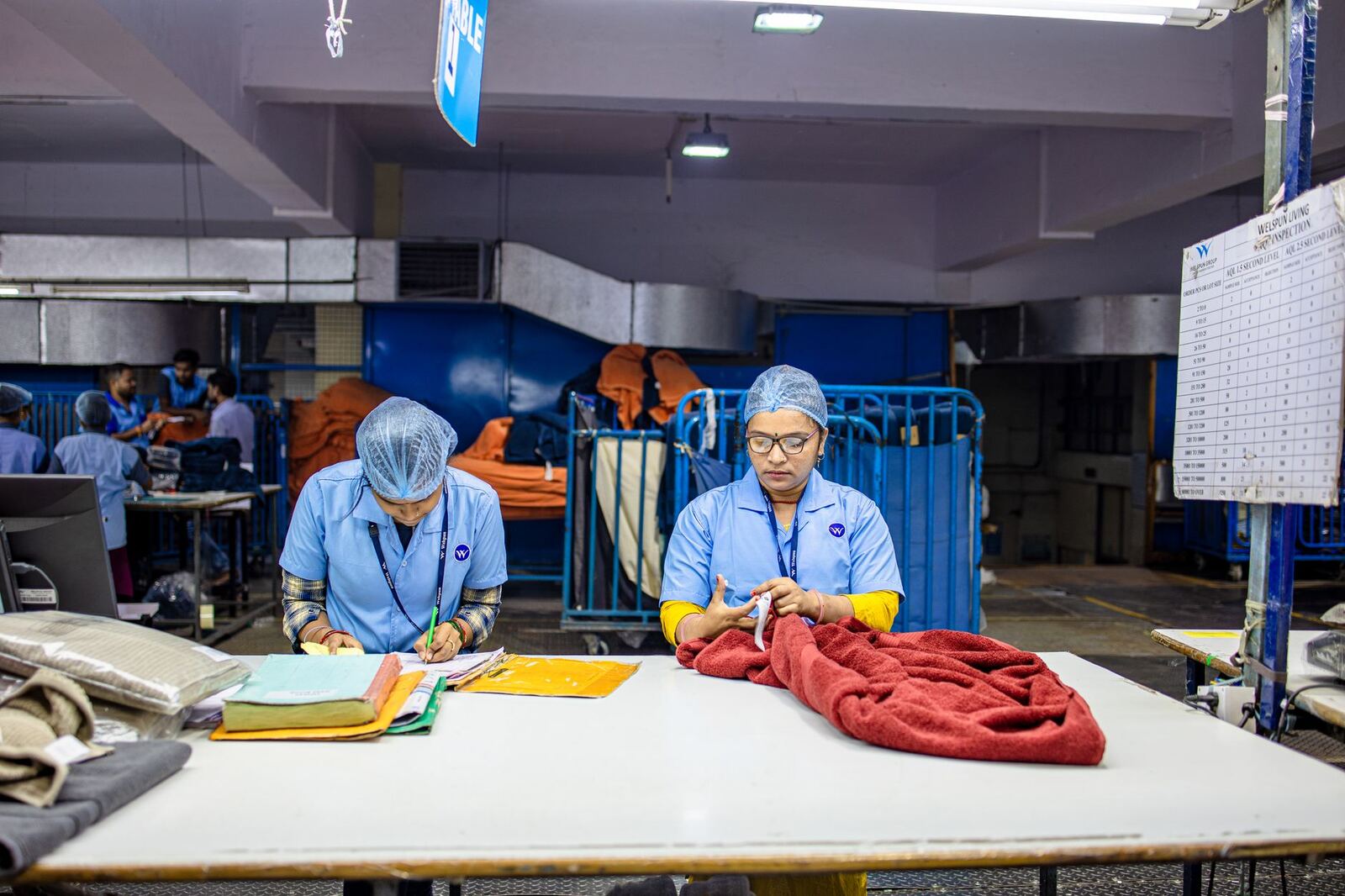
Reprints are the most expensive thing a print shop does. You pay for the blanks twice, the labour twice, and often the freight twice, on a job that is now late. And almost all of them are caught by checks that cost under two minutes.
The principle: check before the expensive step, not after it.
The five checks
1. Blanks in: count and inspect
Before anything is decorated. Count against the purchase order, check sizes and colours, look for mill faults, dye variation between cartons and mislabelled sizes. Finding a short shipment now costs a phone call. Finding it after decorating 46 of 50 costs the job.
2. Setup against the approved proof
Position, size, garment colour, ink colours, quantity per size. Read them off the approved proof, not off memory or a verbal. This is where "we printed the old version" is prevented, and it is why proof versioning matters.
3. First-off sign-off
Print one. Stop. Check it against the proof for registration, opacity, position and placement height. Then run the batch. A shop that skips this is betting a whole run on a setup nobody has looked at.
4. Cure verification
Stretch test on the first-off, and a wash test whenever the ink, garment or dryer settings are new. Under-cure is invisible on the day and obvious after the customer's first wash, which is the worst possible time to find out.
5. Count and check at pack
Count by size against the order. Look at every piece as it folds, front and back. Set aside seconds rather than hoping nobody notices. Pack, label, and record the count.
Where each check sits
| Check | Position in the run | Cost if skipped |
|---|---|---|
| Blanks in | Before decoration | Whole batch of wrong garments |
| Setup vs proof | Before first print | Whole run, wrong version |
| First-off | After one piece | One garment vs the batch |
| Cure test | After first-off | Customer's washing machine |
| Pack count | Before dispatch | Freight twice, credibility once |
Make the checks recorded, not remembered
A checklist that lives in someone's head is a preference. Two things turn it into a process:
- A name against each check. Not blame, traceability. When a fault gets through you want to know which check missed it so you can fix the check.
- A stage that cannot be left without it. If QC is a step the job passes through rather than a habit, it happens on the busy days too. Busy days are when reprints are made.
The seconds bin
Have one, use it, and price accordingly. A shop with no seconds is either extremely good or shipping its mistakes. Building your real reject rate into your cost per unit means the occasional spoiled garment is already paid for rather than eating a job's margin.
Count the cost of a reprint properly
A reprint is not one blank. It is the blank, the ink, the press time, the setup if screens came down, the delivery you now have to expedite, the admin of explaining it, and the slot it takes from a job that was already scheduled. Costed honestly, a single reprinted 24-piece job can wipe out the margin on two similar jobs.
| Cost line | Typical on a 24-piece rerun |
|---|---|
| Blanks written off | £58 |
| Ink and consumables | £9 |
| Press and labour, setup plus run | £70 |
| Expedited freight | £18 |
| Admin and customer handling | £15 |
| Displaced work | The real one, hardest to price |
That is why the checks above belong before the expensive step. Two minutes at first-off is the cheapest insurance in the building.
Make the record automatic rather than diligent
Checklists on paper work for a fortnight and then live in a drawer. What survives is a check that is part of moving the job forward: a stage the job cannot leave until someone has advanced it, with a name and a timestamp attached.
In practice that means QC is a stage on the board rather than a habit, the approved proof is attached to the order so the setup check is against the exact version the customer signed, and advancing the job is a scan or a tap that records who did it. If staff also clock on and off the job, you get the other half of the picture: which jobs consumed rework hours, visible in the job costing report as jobs whose labour ran far past the norm for their size.
That pairing, a recorded check plus recorded hours, is what turns quality from an argument into a number.
Track five cause codes, review monthly
- Artwork. Wrong version, missing bleed, low resolution, unapproved change.
- Setup. Registration, placement, wrong garment or size pulled, wrong ink.
- Material. Faulty blank, dye migration, inconsistent fabric.
- Cure. Under-cured, over-cured, dryer drift.
- Handling. Marked, folded wet, contaminated, damaged in pack.
A month of codes will usually show one dominant cause, and it is often material or artwork rather than the press work everyone assumes. Material faults point at a blanks decision; artwork faults point at the approval process, where the fix is a clear approved version rather than a longer checklist.
The weekly number to watch
One line on your weekly review: rejects as a percentage of garments decorated, and the reprint cost in money. Both trending down is a shop getting better. Reject rate flat while volume rises is a shop that will hit a wall in rush season. See print shop KPIs for where this sits among the other numbers worth reading weekly.
Printer's Friend attaches the approved proof to the order so the setup check is against the exact version the customer signed, and QC is its own stage on the floor board with a scan-in so the count is recorded rather than recalled. For where QC sits in the whole path, see the nine stages.